Cosmetic breast reduction surgery, known clinically as reduction mammaplasty,
is a surgical procedure that reduces breast volume and reshapes breast
tissue to achieve a smaller, more proportionate appearance. At the
Plastic and Cosmetic Surgery Clinic in Prairie du Sac, patients whose motivation is aesthetic rather than the relief of documented
physical symptoms consult with Plastic Surgeon Rosaline Reynolds, MD,
MS. It is an elective surgery, distinct from functional breast reduction,
which is performed to address clinical conditions including chronic pain,
postural problems, or skin breakdown caused by breast weight.
People who pursue cosmetic breast reduction typically describe a breast
size that feels inconsistent with their body frame, affects how clothing
fits, or limits comfort during physical activity, without reaching the
threshold of documented symptoms associated with functional surgery. For
patients throughout south-central Wisconsin, the Plastic and Cosmetic
Surgery Clinic provides a high-quality option for this procedure. Dr.
Reynolds, a board-eligible plastic surgeon with the American Board of
Plastic Surgeons who completed her Plastic Surgery Integrated Residency
at the University of Wisconsin Hospital & Clinics in Madison, performs
cosmetic breast reduction at Sauk Prairie Healthcare.
Who Is a Candidate for Cosmetic Breast Reduction?
The best candidates for cosmetic breast reduction are adults in good overall
health with stable weight and realistic expectations for what surgery
can achieve. Breast size should be fully developed before pursuing the
procedure, which typically means patients are at least 18 years of age,
though this is evaluated individually. Candidates who are currently pregnant
or breastfeeding are advised to wait until those stages are complete,
as breast tissue continues to change during and after pregnancy.
Patients who smoke are asked to stop before surgery and remain abstinent
through recovery. Smoking increases the risk of wound healing complications
significantly, which is particularly relevant in breast reduction given
the extent of the incisions involved. A thorough pre-operative evaluation
covers medical history, current medications, and overall physical health
to confirm that surgery is appropriate for a given patient.
Because cosmetic breast reduction is elective, the standard for candidacy
is not clinical documentation of symptoms. Instead, it is the patient’s
own clear and informed sense of what they want to change, combined with
a realistic understanding of what the procedure involves, including its
limitations and the recovery process ahead. A consultation with the surgical
team is where those details are reviewed and questions are addressed.
What the Procedure Involves
Reduction mammaplasty is performed under general anesthesia as an outpatient
procedure. The surgery removes excess breast tissue, fat, and skin through
a carefully planned set of incisions, then reshapes the remaining tissue
into the desired contour. Two incision patterns are most common: the vertical
pattern, which uses incisions around the areola and straight down to the
breast fold, and the inverted-T or anchor pattern, which adds a horizontal
incision along the inframammary crease. The appropriate pattern depends
on the amount of tissue being removed and the patient’s individual anatomy.
As part of the procedure, the nipple-areola complex is repositioned to
a higher location on the breast mound to correspond to the new, reduced
size. In most cases nipple sensation is preserved, though individual outcomes
can vary. The procedure typically takes two to four hours, and patients
go home the same day with written post-operative instructions and a scheduled
follow-up appointment.
Liposuction may be used alongside tissue removal in select cases to refine
the contour along the outer breast or axillary area. Patients considering
additional
cosmetic procedures alongside breast reduction are encouraged to raise those options during
the consultation, as the surgical team can evaluate whether a combination
approach is appropriate for their goals and anatomy.
Recovery After Cosmetic Breast Reduction
Most patients take one to two weeks away from work before resuming desk-based
activities. Strenuous physical activity, including exercise and heavier
lifting, is typically restricted for four to six weeks. During early recovery,
patients wear a surgical bra or supportive compression garment that minimizes
swelling and supports the breast tissue as it heals into its new shape.
Swelling and bruising are normal in the initial weeks and subside gradually.
The breasts continue to settle into their final position over several
months, and full results are not visible until residual swelling has resolved
completely.
Pain in the first few days after surgery is managed with prescribed medications.
Patients should plan for limited activity at home during the early recovery
period and arrange help with tasks that involve lifting or overhead reaching.
Follow-up appointments are scheduled to monitor healing progress and address
any questions that arise. Any changes at the incision sites, such as increased
redness, warmth, or drainage, should be reported to the care team promptly.
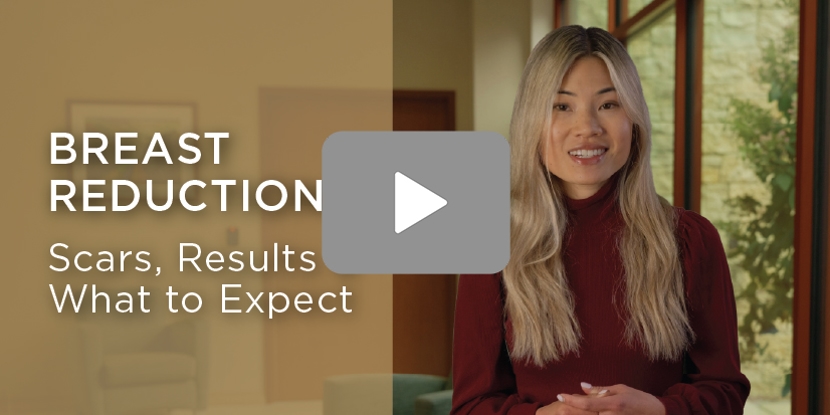
Scarring and Long-Term Results
Scarring is a permanent and expected result of breast reduction surgery.
The extent and location of scars are determined by the incision pattern
used, and while they do not disappear, most scars fade and flatten considerably
over 12 to 18 months. In both the vertical and anchor incision patterns,
the incisions are placed along natural contours of the breast where they
are least visible beneath clothing and most swimwear.
Consistent scar care during recovery, including protecting incisions from
sun exposure and following the surgeon’s recommended topical protocol,
supports the best possible long-term appearance. Patients with a personal
or family history of keloid or hypertrophic scarring should discuss this
during the initial consultation, as it may factor into decisions about
surgical approach.
The results of cosmetic breast reduction tend to be long-lasting. Significant
changes in body weight or a subsequent pregnancy can alter breast size
and shape over time, and patients who anticipate becoming pregnant in
the near future may want to discuss timing during their consultation.
For patients who maintain a stable weight following recovery, outcomes
generally remain consistent over the long term.
How Cosmetic and Functional Breast Reduction Differ
The same surgical techniques used in cosmetic breast reduction are applied
in functional, or reconstructive, breast reduction as well, but the two
procedures serve different purposes and are evaluated by different criteria.
Functional breast reduction is performed when a patient has documented medical conditions attributed
to breast size, such as chronic neck, shoulder, or back pain, postural
problems, skin rashes or infections in the inframammary fold, or nerve
compression. When these criteria are met and conservative treatment has
not provided adequate relief, the procedure may be covered by insurance
as medically necessary.
Cosmetic breast reduction is pursued when the primary reason for surgery
is aesthetic. There is no threshold of physical symptoms required, and
the procedure is not covered by health insurance, so patients pay for
it as an out-of-pocket expense. The complimentary consultation will include
information about pricing and available payment options.
Some patients are uncertain which category applies to their situation,
particularly those who have aesthetic concerns alongside physical discomfort
that falls short of the clinical threshold. The pre-operative evaluation
is designed to work through those details. Patients whose presentations
suggest a medical case may be better served by reconstructive breast reduction,
while those whose primary motivation is aesthetic are candidates for cosmetic
reduction. For patients who ultimately are determined to be candidates
for functional breast reduction and are interested in pursuing insurance
coverage for the procedure, their consultation will be billed to insurance
as part of starting the prior authorization process.
Cosmetic breast reduction is a well-established surgical option for patients
who want to change their breast size for personal reasons, and the decision
is best made with thorough information about what the procedure involves,
realistic expectations for results, and a care team that understands individual
goals. Sauk Prairie Healthcare’s Plastic and Cosmetic Surgery Clinic
offers complimentary consultations to help patients work through whether
this procedure is the right fit and what their recovery and results are
likely to look like.
Schedule a Consultation at the Plastic and Cosmetic Surgery Clinic
To schedule a complimentary consultation for cosmetic breast reduction
surgery at Sauk Prairie Healthcare, call the Plastic and Cosmetic Surgery
Clinic at 608-643-4140. The clinic is located at 250 26th Street, Suite
135, Prairie du Sac, WI 53578. Consultations include a detailed review
of your goals, anatomy, and surgical options, giving you the information
needed to make a confident, informed decision about whether this procedure
is right for you.
Frequently Asked Questions About Cosmetic Breast Reduction Surgery
Is cosmetic breast reduction covered by insurance? Cosmetic breast reduction is an elective procedure and is not covered by
health insurance. Because it is performed for aesthetic rather than medically
documented reasons, patients pay for it as an out-of-pocket expense. This
differs from functional breast reduction, which may qualify for coverage
when specific clinical criteria are met.
How long does the procedure take, and do I need to stay overnight? Reduction mammaplasty typically takes two to four hours and is performed
as an outpatient surgery, meaning most patients go home the same day.
The exact duration depends on the amount of tissue being removed and the
individual’s anatomy. A driver is required to take patients home
following surgery.
When can I return to work after cosmetic breast reduction? Most patients return to desk-based or sedentary work within one to two
weeks of surgery. Jobs that require physical activity, lifting, or extended
time on your feet may require four to six weeks away. Your surgical team
will provide personalized guidance based on your recovery progress and
the demands of your work.
Are the scars from breast reduction permanent? Yes, breast reduction scars are permanent, but most fade and flatten significantly
over 12 to 18 months. Incisions are placed along the natural contours
of the breast to minimize visibility under clothing. Following your surgeon’s
scar care recommendations consistently after surgery helps optimize their
long-term appearance.
Can I get pregnant after cosmetic breast reduction? Pregnancy is possible after breast reduction surgery. However, pregnancy
can change breast size and shape, which may affect the long-term results
of the procedure. Patients who plan to become pregnant in the near future
are generally encouraged to discuss timing during their consultation,
as completing family plans before surgery tends to produce the most consistent
long-term outcomes.
Ready to take the next step? Call
608-643-4140 to schedule a consultation.
________________________________
References:
American Society of Plastic Surgeons (ASPS). Breast Reduction Surgery.
plasticsurgery.org.
American Society of Plastic Surgeons (ASPS). Plastic Surgery Statistics
Report. plasticsurgery.org.
American Board of Plastic Surgery. Board Certification in Plastic Surgery.
abplasticsurgery.org.